Switchable Film Applications: Technical Fit and Limits
Switchable Film Applications: Technical Fit and Constraints
Switchable glass used to be a product you only saw in luxury showrooms and tech conference demos. That is not the world we live in anymore. Before choosing a format for your application, see our technical comparison of film vs glass. Over the past five years, the cost of PDLC film has dropped enough that architects specify it in mainstream projects, and the number of applications keeps growing.
But not every application is technically equal. Each use case imposes different constraints on the film: temperature ranges, humidity exposure, viewing angles, panel sizes, and switching frequency. Understanding these technical boundaries is what separates a successful installation from a callback.
Here are the primary application categories, and the technical fit and limits of each.
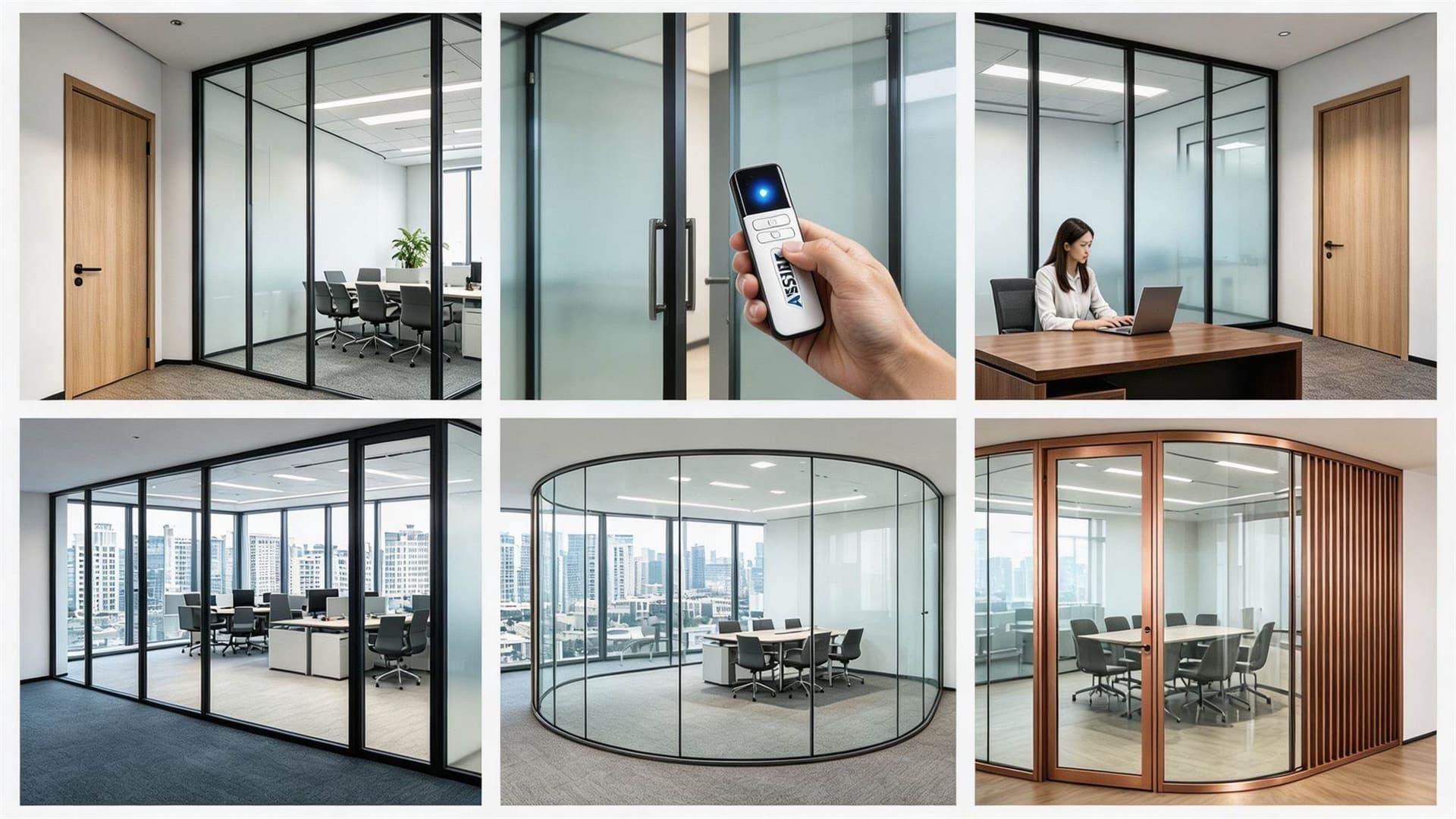
1. Corporate Office Meeting Rooms
This is the single largest market for PDLC film. Glass-walled meeting rooms are everywhere in modern offices, but the lack of privacy during confidential calls is a real problem. PDLC film solves it: the room looks open and transparent for everyday collaboration, and one switch turns it frosted for a sensitive discussion.
Technical fit: Interior glass, controlled climate, moderate switching frequency (5-20 times per day). Self-adhesive film on existing tempered glass is the standard approach. Panel sizes typically range from 1m² to 6m² per partition.
Constraints: Large panels over 2m wide require multi-roll seaming, which must be planned to land on mullion lines. Bus bar routing must be concealed in the ceiling or floor track. Multi-zone switching is common when an open floor plan has multiple meeting rooms sharing a glass wall.
2. Hotel Rooms and Bathrooms
Luxury hotels were early adopters. A glass-walled bathroom is a signature design feature in boutique hotels, but guests need privacy when they shower. PDLC film lets the bathroom stay visually open and bright when unoccupied, and instantly frosted when the guest presses the wall switch.
Technical fit: Interior glass, high humidity environment, frequent switching (multiple times per guest stay). Both self-adhesive and laminated formats work, but laminated smart glass is preferred for shower enclosures due to moisture exposure.
Constraints: Humidity is the primary concern. Self-adhesive film requires all four edges sealed with pH-neutral silicone. Laminated smart glass is factory-sealed and more reliable in wet areas. Temperature in hotel bathrooms can spike to 40°C+ during hot showers, within the operating range but worth noting for edge seal durability.
3. Healthcare and Hospitals
Hospitals need patient privacy without sacrificing natural light. Traditional curtains trap dust and are difficult to clean. PDLC film on examination room windows and partitions gives instant privacy during consultations while maintaining the clean, light-filled feel that supports healing.
Technical fit: Interior glass, controlled climate, frequent cleaning with disinfectants. Self-adhesive film is common for retrofit; laminated glass for new construction.
Constraints: Chemical resistance is critical. Hospital-grade disinfectants can degrade adhesive edges over time. Laminated smart glass is preferred for high-cleaning areas. MRI and X-ray rooms require special consideration for electromagnetic compatibility, though PDLC film operates at low voltage and does not interfere with imaging equipment.
4. Retail and Showrooms
Retailers use the frosted state as a projection screen. A storefront or fitting room wall that is clear by day becomes a video display at night. This dual-use surface has made PDLC popular in flagship stores, museum displays, and exhibition booths.
Technical fit: Storefront glass, variable climate, projection use in frosted state. Both formats work; self-adhesive for retrofit storefronts, laminated for new construction.
Constraints: Projection quality depends on the frosted state uniformity. Cheap film with uneven liquid crystal dispersion produces blotchy projection. Exterior storefronts have wider temperature swings (-10°C to 50°C), which is within operating range but requires UV-stabilized film to prevent yellowing.
5. Residential and Luxury Homes
Homeowners specify PDLC film in bathrooms, walk-in closets, and home offices. It integrates with smart home systems so the film switches automatically at sunset or when the door locks.
Technical fit: Interior glass, controlled climate, low switching frequency. Self-adhesive film is the dominant format for residential retrofit.
Constraints: Residential panels are often custom sizes and shapes, requiring precision cutting. Smart home integration (Wi-Fi, Zigbee, dry contact) must be specified at the time of order. DIY installation is possible for small panels under 2m², but professional installation is recommended for larger or shaped panels.
6. Transportation and Marine
Yacht builders use PDLC film on cabin windows because space is limited and curtains do not fit. Train and bus manufacturers use it for partition windows between passenger areas.
Technical fit: Vibration environment, variable temperature, limited space for transformers. Laminated smart glass is preferred for structural and vibration resistance.
Constraints: Vibration is the primary challenge. Bus bar connections must be reinforced against fatigue. Marine environments have salt air and high humidity, requiring corrosion-resistant bus bars and premium edge sealing. Operating temperature in vehicles can range from -20°C (winter parking) to 70°C (sun-soaked interior), pushing the upper limit of standard film.
7. Elevator Cabs and Partitions
Elevator interior glass partitions use PDLC film for privacy between the cab and the hoistway, or between passenger sections.
Technical fit: Compact space, frequent cycling, vibration. Self-adhesive film on existing cab glass is common.
Constraints: Elevator cabs have limited space for transformers, often requiring compact DIN-rail mounted units. Frequent cycling (hundreds of times per day) is within the 50,000-hour rated lifespan but should be considered in product selection.
Technical Limits Across All Applications
Regardless of application, several hard limits apply to PDLC film technology:
- Maximum single-panel width: 1.8m for self-adhesive rolls, 2.1m for factory-laminated glass. Wider panels require seaming.
- Minimum bend radius: PDLC film cannot be bent to a radius smaller than 50cm without damaging the ITO layer. Curved glass requires pre-curved lamination.
- Operating temperature: -20°C to +60°C for standard film. Beyond this range, liquid crystal response slows or the polymer matrix degrades.
- Switching frequency: Rated for continuous operation, but rapid cycling (more than once per 3 seconds) can cause premature bus bar wear.
- Humidity: 90% RH non-condensing for properly sealed edges. Condensation on unsealed edges causes delamination.
Why Technical Fit Matters
Across all these applications, the common thread is that PDLC film is not a one-size-fits-all product. The right format, grade, and sealing approach depends on the environmental conditions of the specific application. A film that works perfectly in an air-conditioned office may fail prematurely in a humid hotel shower if the edges are not properly sealed.
As a PDLC film producer, AYSENT provides application-specific guidance for each project, including format recommendation, grade selection, and edge sealing specifications. For non-standard panel sizes or shapes, review our custom smart film feasibility guide.
Frequently Asked Questions
What are the most common uses of switchable glass?
Can PDLC film be used in bathrooms?
Is switchable glass suitable for exterior windows?
How is PDLC film used in office partitions?
Can smart film be used for projection screens?
Ready for Your Project?
Get free samples and a custom quote from AYSENT, your trusted PDLC smart film manufacturer.
Request a Free Quote