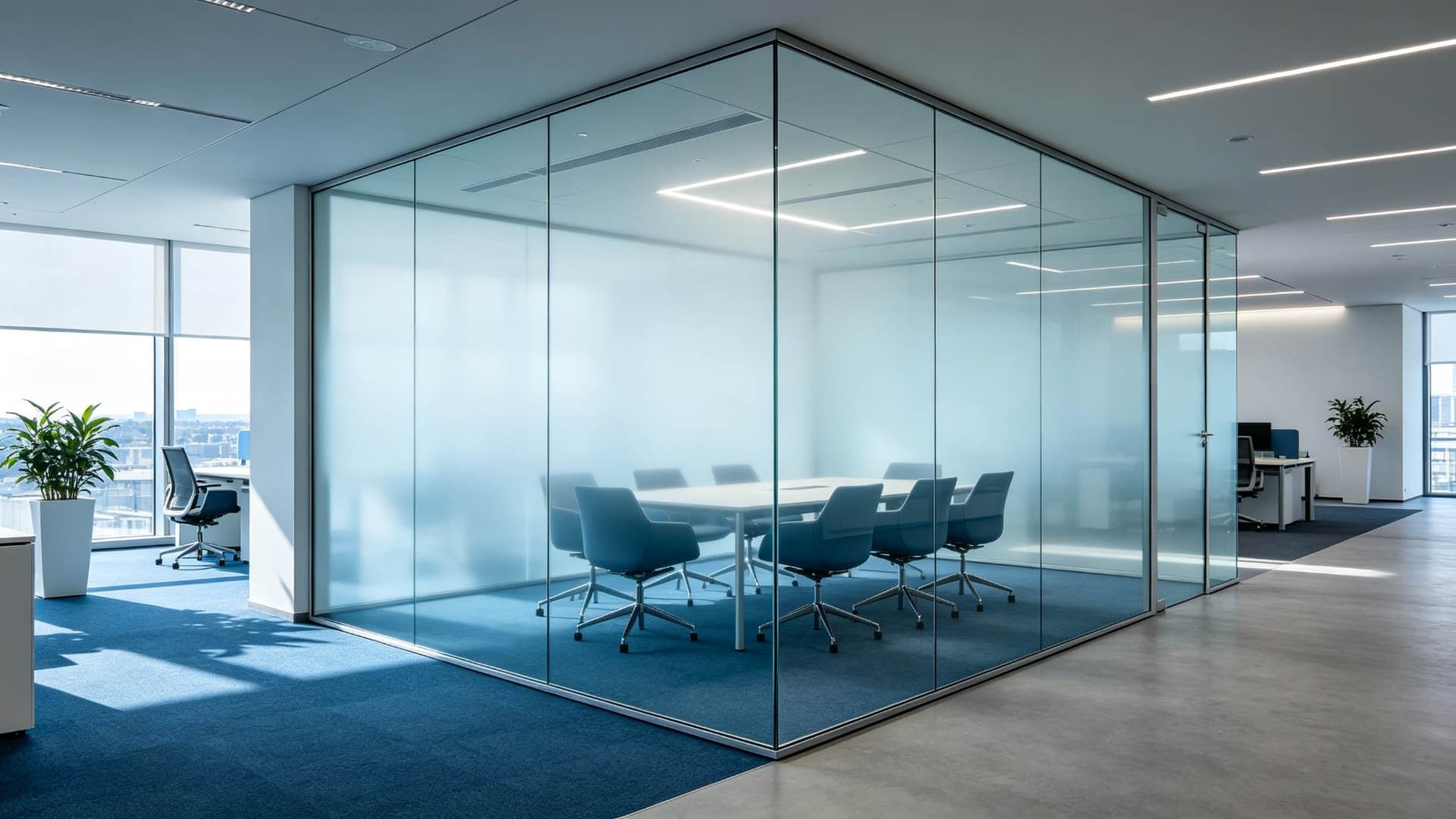
Smart Film for Office Privacy: What It Costs and What It Saves
When a facilities manager first quotes PDLC film for an office retrofit, the sticker price usually gives them pause. It is more expensive than blinds, and it is more expensive than frosted vinyl. Offices are just one of many use cases — our applications overview covers hotels, healthcare, retail and more. But if you run the numbers over the life of the office, smart film almost always wins.
Here is how the cost actually breaks down, and why companies keep choosing it.
The Upfront Cost
Self-adhesive PDLC film typically costs between $80 and $150 per square meter, depending on quantity and width. That includes the film itself, but not the transformer, wiring, switches, or installation labor.
Add the control system, and you are looking at roughly $110 to $180 per square meter installed. A 50-square-meter office floor comes to about $5,500 to $9,000 all in.
Compare that to traditional solutions:
| Solution | Cost per m² | Lifespan | Maintenance |
|---|---|---|---|
| Vertical blinds | $20-40 | 3-5 years | Regular replacement, cleaning |
| Frosted vinyl | $15-30 | 2-4 years | Peels off, needs reapplication |
| PDLC smart film | $110-180 | 15+ years | Near zero |
| Pull-down curtains | $25-50 | 3-5 years | Laundering, track repair |
The Hidden Savings
The upfront number looks high, but it misses three things.
First, blinds and curtains need replacement every three to five years. Over a 15-year building lease, you replace them three times. The PDLC film is still on its first cycle. The total cost of ownership quickly evens out.
**Second, maintenance. Blinds collect dust. Curtains need laundering. Tracks break. A facilities team spends hours every year cleaning and repairing window treatments. PDLC film needs nothing beyond an occasional glass wipe.
**Third, space. A blind takes up 10 to 15 centimeters of depth at the top of the window. In an office where every centimeter of floor space matters, that is wasted area. PDLC film sits flush against the glass.
The Productivity Argument
There is also a harder-to-quantify benefit. Meeting rooms that are perpetually frosted feel dark and closed off. Rooms with no privacy force people to book conference rooms for every sensitive call, wasting shared space.
PDLC film gives offices both. The meeting room looks open and transparent for everyday use. If you are unfamiliar with how the switching technology works, our PDLC technology primer explains the science in plain terms. People book it for ten-minute calls. When a confidential discussion starts, the switch goes to frosted. This flexibility changes how teams use space.
The ROI Math
Let us run a simple example. A 100-square-meter office floor with 30 square meters of glass partitions.
- Blind option: $30/m² × 30m² = $900 upfront, replaced every 4 years. Over 15 years: $3,375 in blinds plus maintenance.
- PDLC option: $140/m² × 30m² = $4,200 installed. Zero replacement. Zero maintenance.
The PDLC option costs more upfront, but within 6 to 8 years it breaks even. After that, it is pure savings. For a building owner planning a 10-year lease, the math is straightforward.
What to Budget For
If you are pricing a project, remember these add-ons:
- Transformer and control system: $30 to $50 per linear meter of glass
- Installation labor: 20 to 30 percent of material cost
- Multi-zone switching (different groups switch independently): 10 to 15 percent extra
- Smart home integration (Alexa, sensor-based switching): optional, about $200 per zone
AYSENT provides detailed project quotes that include the full installed cost, not just the film price. Send us your glass sizes and floor plan, and we will show you the real ROI.
Environmental and Energy Considerations
Beyond the direct cost comparison, PDLC film contributes to energy efficiency in ways that are often overlooked. In the frosted state, the film scatters incoming sunlight, reducing solar heat gain by roughly 30 to 40 percent compared to clear glass. In glass-heavy offices in warm climates, this translates directly to lower peak cooling loads and smaller HVAC equipment sizing.
The film also blocks 99 percent of UV radiation, which protects furniture, carpets, and artwork from fading. In offices with expensive finishes or museum-quality displays, this UV protection alone can justify a portion of the investment.
When combined with a light sensor control system, the film can switch to frosted automatically during peak sun hours, reducing glare on computer screens and improving occupant comfort. Studies of open-plan offices have shown that glare reduction from adaptive glazing can increase productivity by 2 to 5 percent in roles that involve screen-based work.
Financing and Lease Structures
For tenants rather than building owners, the upfront cost can be a barrier. Several financing models have emerged:
- Operating lease: The supplier installs and maintains the film for a fixed monthly fee, typically over three to five years. This converts a capital expense into an operating expense.
- Energy savings contract: The supplier guarantees a minimum reduction in HVAC costs, and the monthly payment is structured against those savings.
- Landlord contribution: In multi-tenant buildings, landlords often contribute to the installation because it increases the asset value and makes the space more marketable to future tenants.
For companies planning to stay in their space for more than five years, outright purchase almost always delivers the best total cost of ownership. For shorter leases, a lease or rental model may be more appropriate.
Frequently Asked Questions
How much does PDLC smart film cost for an office?
What is the ROI of installing smart film in offices?
Does smart film reduce HVAC costs?
Can PDLC film improve meeting room privacy?
How long does it take to recoup the investment?
Ready for Your Project?
Get free samples and a custom quote from AYSENT, your trusted PDLC smart film manufacturer.
Request a Free Quote